
Short Description: Learn how dry jet milling technology improves ultrafine powder processing, particle size control, and product purity. Discover how to select the right Pulverizing Mill for your industrial applications.
Introduction
In pharmaceutical, chemical, food, agrochemical, and advanced materials manufacturing, particle size can significantly affect product performance, dispersion, dissolution, and consistency. Choosing the right Pulverizing Mill is therefore essential for achieving reliable powder quality and efficient production.
Dry jet milling is an advanced particle size reduction technology that uses high-velocity compressed air or other suitable gases to grind materials without conventional mechanical grinding media. For manufacturers requiring ultrafine powders, this technology offers a practical solution for controlling particle characteristics while minimizing direct contact between the material and moving grinding components.
1. How Does Dry Jet Milling Work?
A modern Pulverizing Mill based on dry jet milling accelerates particles through high-speed gas streams into a specially designed grinding chamber. The particles collide with one another, generating impact and shear forces that break them into smaller sizes.
In a fluidized-bed jet mill, multiple nozzles create the airflow needed for particle acceleration and grinding. An integrated classifier separates fine particles from larger ones. Qualified particles move toward the collection system, while oversized particles remain in circulation for further grinding.
This integrated process helps manufacturers achieve the desired particle size distribution by adjusting parameters such as classifier speed, gas pressure, and feed rate. Actual performance depends on material hardness, moisture content, feed size, and other process conditions.
2. Key Benefits of a Dry Jet Pulverizing Mill
Precise particle size control
A Pulverizing Mill equipped with an adjustable air classifier allows manufacturers to control product fineness according to application requirements. Consistent particle size can improve formulation stability, dispersion, and downstream processing.
Reduced contamination risk
Because particle reduction primarily results from particle-to-particle collisions, dry jet milling can reduce wear-related contamination compared with some mechanical grinding technologies. For high-purity applications, suitable contact materials and equipment cleaning procedures remain essential.
Suitable for heat-sensitive materials
The use of high-speed gas expansion can help limit temperature increases during grinding. This makes a jet-based Pulverizing Mill worth evaluating for selected heat-sensitive pharmaceutical ingredients, food powders, and specialty chemicals. Product temperature should still be verified through material testing.
Efficient dry processing
Dry jet milling does not require liquid grinding media, potentially eliminating additional drying steps associated with wet grinding. Manufacturers should nevertheless assess compressed-air consumption, collection efficiency, and overall operating costs.
3. How to Select the Right Equipment
Before purchasing a Pulverizing Mill, define your target particle size, required throughput, raw material characteristics, and final product specifications.
For pharmaceutical and food applications, consider hygienic design, cleanability, suitable contact materials, and measures to prevent cross-contamination. For abrasive materials, wear-resistant liners and classifier components may help maintain product purity and equipment service life.
When handling combustible powders, evaluate dust explosion risks and ensure that the complete processing system incorporates appropriate protective measures for the material and operating environment.
Pilot testing with representative samples is one of the most effective ways to verify grinding performance, product quality, and realistic production capacity before investing in a full-scale system.
4. Industrial Applications of Dry Jet Milling
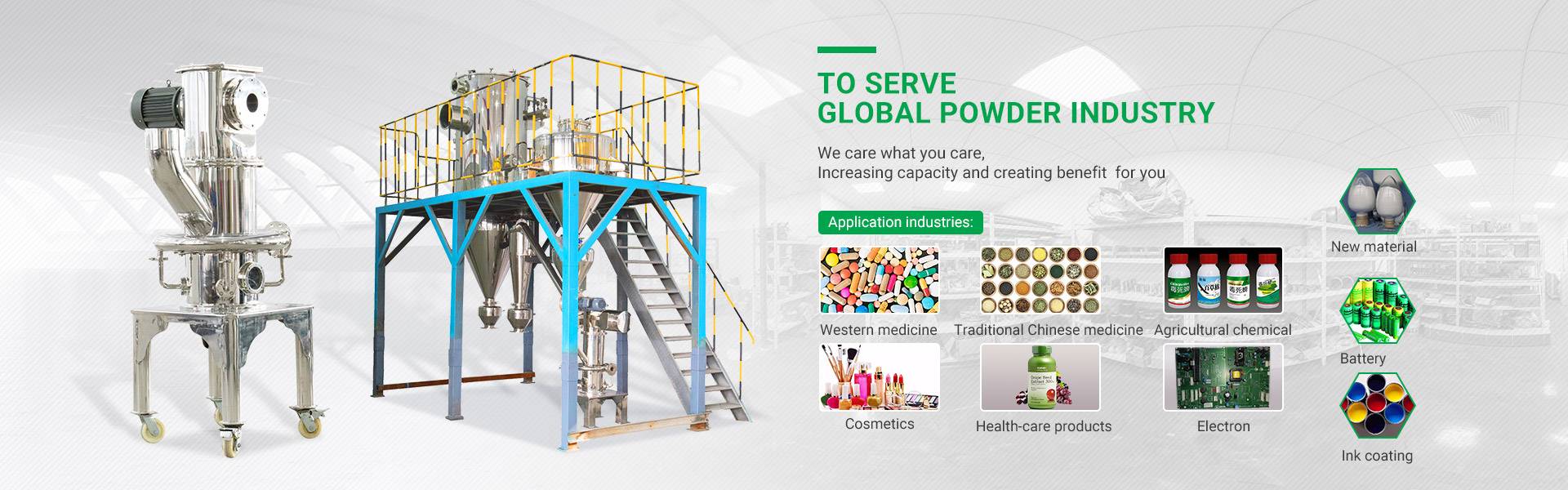
A specialized Pulverizing Mill can support diverse powder-processing requirements. Pharmaceutical manufacturers use jet milling for selected active ingredients and intermediates. Chemical producers process specialty compounds and functional materials, while food manufacturers may require fine grinding solutions designed for hygienic operation.
In agrochemical production, integrated grinding and mixing systems can help achieve the particle characteristics needed for specific formulations. Advanced ceramics and other hard materials may also benefit from appropriately configured jet milling systems.
The ideal equipment depends on the material and the desired result rather than on machine specifications alone.
5. Work with an Experienced Powder Equipment Manufacturer
Selecting a Pulverizing Mill is not simply about choosing a machine. Grinding technology, classification, dust collection, automation, and safety systems must work together to meet production requirements.
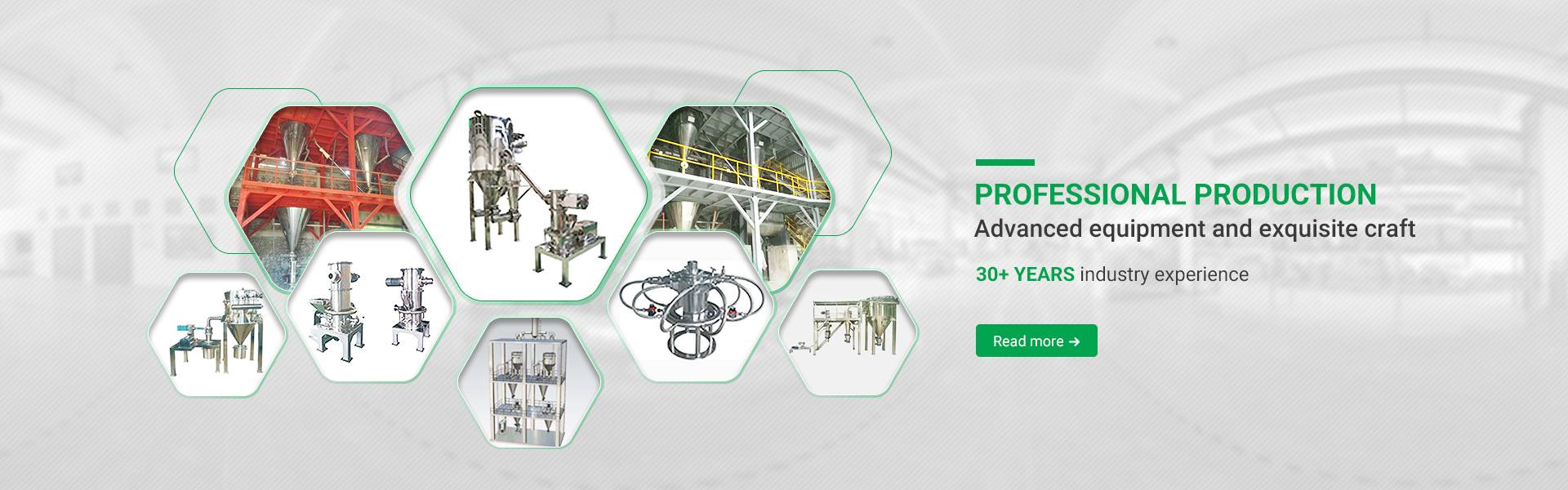
Kunshan Qiangdi Grinding Equipment Co., Ltd. specializes in high-end powder-processing equipment, including fluidized-bed jet mills, disc-type supersonic jet mills, air classifiers, and specialized pharmaceutical, food-grade, and agrochemical processing systems.
Visit Qiangdi Jet Mill to explore available solutions and discuss your material properties, target fineness, and production capacity with the technical team.
Conclusion
Dry jet milling provides a versatile approach to ultrafine powder production. By evaluating particle size requirements, material properties, purity standards, energy consumption, and process safety, manufacturers can select a suitable Pulverizing Mill and improve the consistency of their powder-processing operations.
Post time: Oct-12-2026