
Understanding the Wet Grinder Working Principle is essential for manufacturers that need efficient, controlled, and ultrafine particle size reduction. Unlike conventional dry grinding, wet grinding uses a liquid medium to suspend particles during the milling process. This approach can improve dispersion, reduce dust, control heat generation, and help manufacturers achieve very fine particle sizes.
Modern powder-processing industries use wet grinding for applications involving minerals, chemicals, pigments, ceramics, battery materials, pharmaceuticals, and other advanced materials. A well-designed wet grinding system can provide high efficiency while maintaining stable product quality.
What Is the Wet Grinder Working Principle?
The basic Wet Grinder Working Principle involves feeding solid particles into a liquid to form a slurry, followed by intensive grinding and dispersion inside a grinding chamber. The grinding chamber contains grinding media and a rotating or stirring mechanism. As the agitator moves, the grinding media are accelerated and collide with the suspended particles.
These repeated impacts, compression forces, shear forces, and friction gradually reduce the particle size. At the same time, the liquid prevents the material from becoming airborne and helps transport particles throughout the grinding zone.
In a vertical wet stirring mill, the material is continuously exposed to grinding action as the slurry moves through the grinding chamber. This makes the Wet Grinder Working Principle particularly suitable for applications requiring superfine grinding and stable slurry flow.
How Does a Wet Grinding Mill Work?
The Wet Grinder Working Principle can be understood through several basic stages.
1. Material and Liquid Feeding
First, the raw material is mixed with a suitable liquid to create a pumpable slurry. The selection of liquid depends on the material, final application, viscosity, and required product properties.
Proper feed preparation is important because excessive viscosity can reduce grinding efficiency, while insufficient liquid may cause poor circulation.
2. Grinding Chamber
The prepared slurry enters the grinding chamber. In a vertical wet stirring mill, the chamber contains grinding media and a grinding disc or stirring structure made from wear-resistant materials.
According to equipment information available from the manufacturer, the LSM Vertical Wet Stirring Mill combines characteristics associated with grinding, sanding, and tower grinding. It is designed for high efficiency, low noise, large processing capacity, and convenient operation and maintenance.
3. Particle Size Reduction
The central part of the Wet Grinder Working Principle is the interaction between the grinding media and particles.
When the stirring mechanism rotates, the grinding media move through the slurry. Particles trapped between grinding media are subjected to mechanical forces. Repeated collisions and shear gradually break larger particles into smaller ones.
Because grinding occurs in a liquid environment, the slurry can remain relatively uniform during processing. This is especially useful when the target particle size is in the micron or submicron range.
4. Continuous Circulation
Another important feature of the Wet Grinder Working Principle is circulation. The slurry can pass repeatedly through the grinding zone, allowing particles that have not reached the required fineness to receive additional grinding.
This makes wet milling suitable for continuous production as well as repeated-cycle processing. Product information for the LSM system indicates that wet grinding can support continuous operation and repeated circulation to complete multiple grinding stages.
5. Fine Product Collection
After sufficient grinding, the processed slurry leaves the grinding zone. Depending on the production process, the finished material can then undergo separation, concentration, drying, or additional processing.
The exact configuration should be selected according to the required particle size, production capacity, material characteristics, and downstream process.
Why Is the Wet Grinder Working Principle Important?
The Wet Grinder Working Principle offers several advantages over conventional dry grinding for specific applications.
First, the liquid medium helps control dust. This can be valuable when processing fine powders that are difficult to handle in dry form.
Second, wet grinding can help manage temperature. The liquid medium can absorb and transfer part of the heat generated during particle size reduction, which may be beneficial for temperature-sensitive materials.
Third, wet processing can improve dispersion. Instead of producing only a dry powder, the process can directly create a fine and relatively uniform slurry that may be suitable for subsequent coating, formulation, or chemical processing.
Finally, the Wet Grinder Working Principle can support superfine grinding. According to published product information, the LSM system can achieve very fine grinding under suitable operating conditions, with an example indicating an average particle size below 0.6 μm after two grinding passes from a 325-mesh feed. Actual results, however, depend strongly on material properties and process parameters.
Wet Grinding vs. Dry Jet Milling
It is important not to confuse the Wet Grinder Working Principle with the operating principle of a dry jet mill.
A fluidized-bed jet mill uses high-speed airflow for dry superfine pulverization. Compressed air accelerates the feed material, and particles collide with one another in the grinding zone. Fine particles can then be separated through classification.
A wet stirring mill, by contrast, relies on a liquid slurry, grinding media, and mechanical stirring. Therefore, the two technologies have different strengths.
Dry jet milling can be advantageous when a dry, clean powder with narrow particle size distribution is required. Wet grinding can be preferable when slurry processing, dispersion, heat control, or submicron grinding is important.
Choosing between these technologies should therefore begin with the material and final product requirements rather than simply comparing machine specifications.
Key Factors Affecting Wet Grinding Performance
A good understanding of the Wet Grinder Working Principle also requires attention to operating conditions.
Feed Particle Size
Smaller feed particles generally require less energy to reach the final target size. Proper pre-grinding can therefore improve overall efficiency.
Grinding Media
The size, material, density, and wear resistance of grinding media have a direct effect on grinding performance. Wear-resistant materials can also help minimize contamination.
Slurry Concentration
The solid-to-liquid ratio affects viscosity, particle movement, energy transfer, and throughput. An optimized concentration can help maintain stable grinding conditions.
Grinding Time
Longer residence time does not always mean better economics. The goal is to achieve the required fineness efficiently without unnecessary energy consumption.
Equipment Materials
For sensitive applications, grinding chamber and grinding components should be selected according to chemical compatibility, wear resistance, and contamination requirements. Product information for the LSM mill highlights wear-resistant grinding cylinder and grinding disc materials designed to support longer equipment service life and reduce iron contamination.
Applications of Wet Grinding Technology
The Wet Grinder Working Principle can be applied across many industries where fine particles and stable dispersion are required.
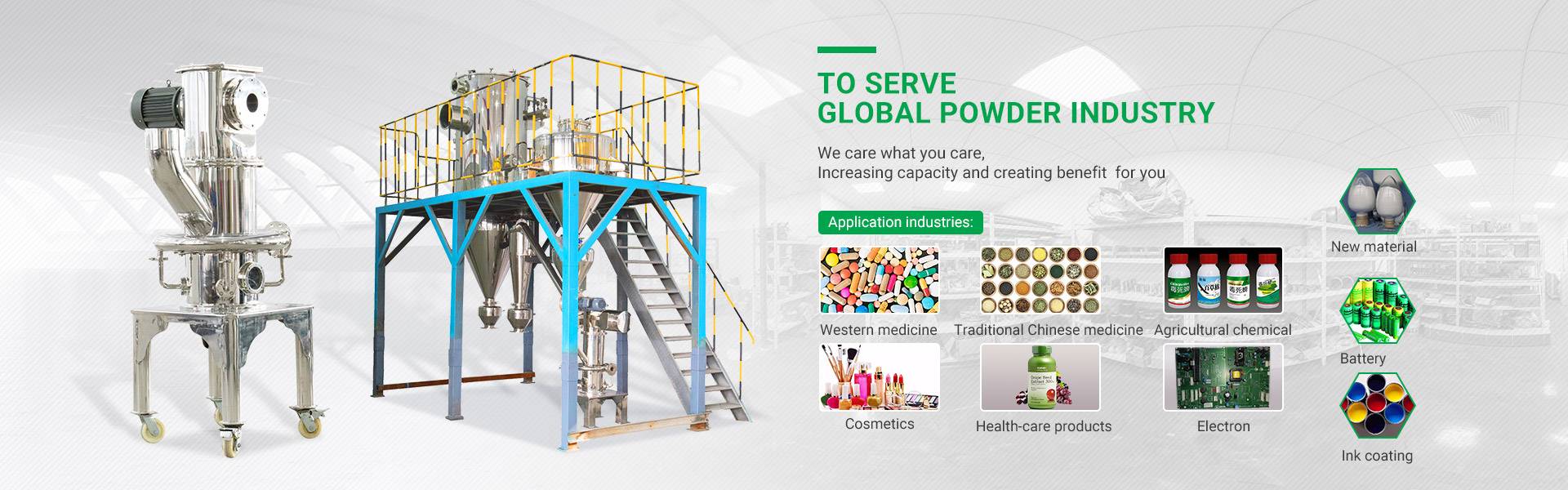
Potential applications include mineral processing, ceramic materials, pigments, advanced chemicals, battery-related materials, and other specialized powder-processing fields.
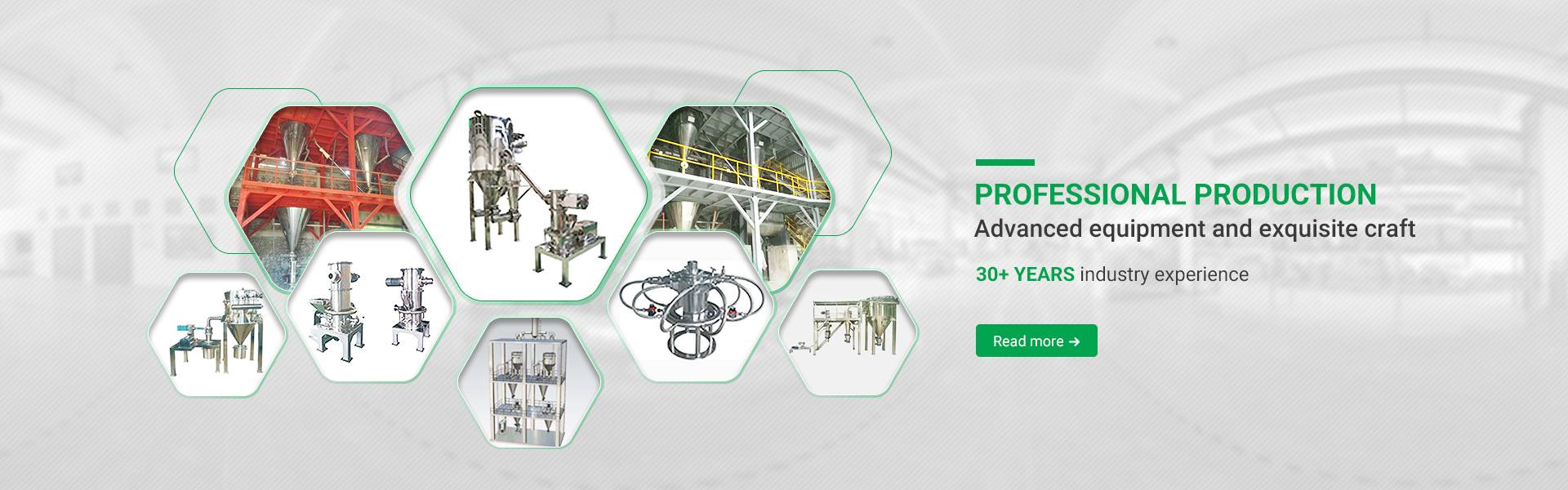
Modern powder equipment suppliers may also combine wet grinding with other technologies to create customized production systems. A broader equipment portfolio can include fluidized-bed jet mills, disc-type supersonic jet mills, air classifiers, GMP/FDA-oriented pharmaceutical and food-grade systems, pesticide grinding and mixing systems, and explosion-proof powder-processing systems.
How to Choose the Right Wet Grinding System
When selecting equipment based on the Wet Grinder Working Principle, buyers should evaluate more than nominal capacity.
Consider the following questions:
- What is the initial particle size?
- What final particle size is required?
- Is the material hard, abrasive, sticky, or temperature-sensitive?
- What liquid or solvent will be used?
- What slurry viscosity is acceptable?
- Is continuous or batch processing required?
- What production capacity is needed?
- Is contamination control important?
- What downstream separation or drying process will be used?
Testing is particularly valuable because different materials can behave very differently under identical milling conditions.
Conclusion
The Wet Grinder Working Principle is based on controlled particle size reduction within a liquid medium, using mechanical stirring and grinding media to create repeated impact, shear, and friction forces. Compared with conventional dry grinding, wet processing can provide advantages in dust control, heat management, dispersion, and ultrafine particle production.
For manufacturers working with demanding powder-processing applications, understanding the relationship between feed characteristics, slurry concentration, grinding media, residence time, equipment design, and final particle size is the key to achieving reliable results.
Modern wet grinding technology is not a one-size-fits-all solution. The most effective system is one designed around the specific material, target fineness, capacity, and downstream process. By applying the Wet Grinder Working Principle correctly and selecting suitable equipment, manufacturers can improve particle-size control, process stability, and overall production efficiency.
Post time: Aug-18-2026