
In modern powder processing industries, achieving precise particle size control is essential for improving product quality, performance, and production efficiency. From pharmaceuticals and food ingredients to chemicals, minerals, and advanced materials, manufacturers require reliable grinding solutions that can produce fine and uniform powders. Among various grinding technologies, the Disc Mill Machine has become an important choice for many industrial applications due to its efficient grinding performance, stable operation, and adaptability to different materials.
A Disc Mill Machine is a type of mechanical grinding equipment that uses high-speed rotating discs and controlled impact forces to reduce material size. By optimizing grinding structures, airflow systems, and classification technology, modern Disc Mill Machine designs can achieve precise particle size distribution while maintaining product quality.
What Is a Disc Mill Machine?
A Disc Mill Machine is a grinding system designed to process materials into smaller particles through mechanical forces such as impact, shearing, and compression. The core components usually include grinding discs, a driving system, feeding unit, and discharge or classification system.
During operation, raw materials enter the grinding chamber through the feeding system. The rotating discs generate strong centrifugal force and high-speed airflow, causing materials to collide with the grinding components and each other. Through repeated crushing and separation processes, the required particle size can be achieved.
Compared with traditional grinding equipment, a Disc Mill Machine offers better control over particle size, higher processing efficiency, and improved adaptability for fine powder production.
How Does a Disc Mill Machine Work?
The working principle of a Disc Mill Machine is based on controlled mechanical energy conversion. When the motor drives the grinding disc at high speed, materials are exposed to intense mechanical forces.
The main grinding processes include:
1. Material Feeding
The raw materials are evenly delivered into the grinding chamber. A stable feeding process ensures consistent grinding performance and prevents equipment overload.
2. High-Speed Grinding
Inside the chamber, rotating discs create strong impact and shear forces. The materials are continuously accelerated, broken, and refined until they reach the desired fineness.
3. Particle Classification
Many advanced Disc Mill Machine systems are combined with air classification technology. Fine particles are separated and collected, while oversized particles return to the grinding area for further processing.
4. Powder Collection
The finished powder is collected through an efficient separation system, reducing material loss and improving production cleanliness.
This combination of grinding and classification technology allows manufacturers to achieve stable and uniform powder quality.
Advantages of Using a Disc Mill Machine
The popularity of the Disc Mill Machine comes from its practical benefits in industrial production.
Precise Particle Size Control
One of the biggest advantages of a Disc Mill Machine is its ability to produce powders with consistent particle size distribution. This is especially important in industries where product performance depends on powder characteristics.
High Grinding Efficiency
The optimized grinding structure enables efficient energy utilization. Materials can be processed quickly, helping manufacturers improve productivity while reducing operational costs.
Wide Application Range
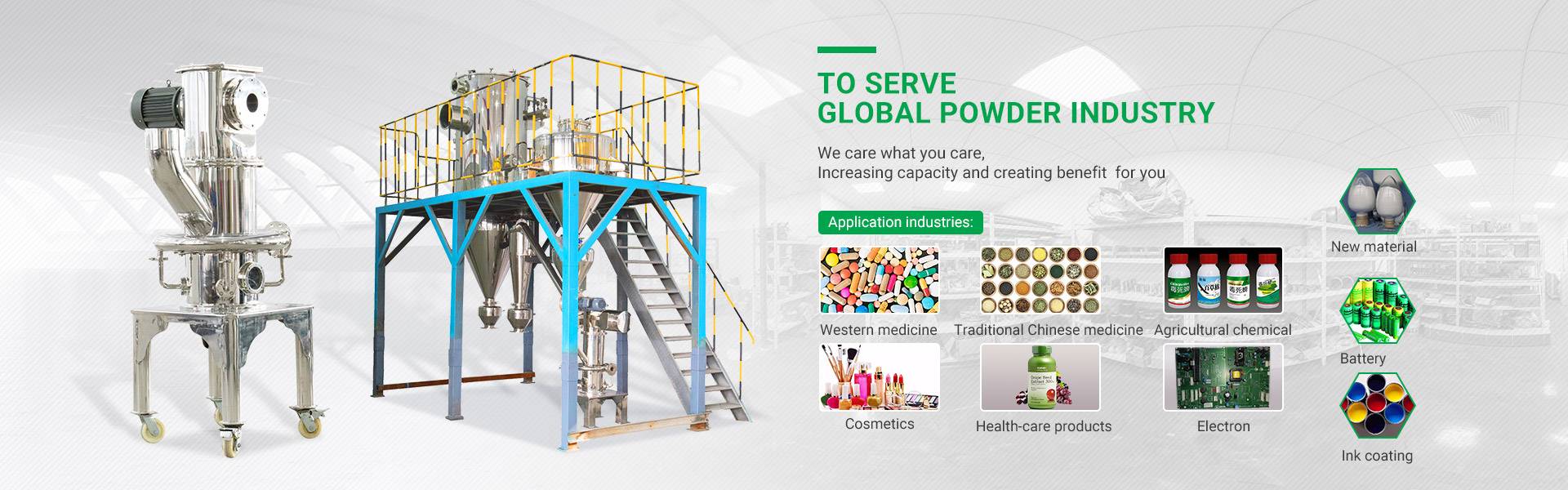
A Disc Mill Machine can be used for various materials, including chemical products, minerals, food ingredients, pharmaceutical materials, and other powder-based products.
Low Contamination Risk
For applications requiring high purity, such as pharmaceutical and food industries, specialized grinding systems can be designed with suitable materials and structures to minimize contamination.
Easy Maintenance
Modern designs focus on convenient operation and maintenance. Wear-resistant components and simplified structures help reduce downtime and improve equipment lifespan.
Applications of Disc Mill Machine in Different Industries
The Disc Mill Machine plays an important role in many industries where fine and uniform powders are required.
Pharmaceutical Industry
In pharmaceutical manufacturing, particle size directly affects dissolution rate, bioavailability, and product consistency. A suitable Disc Mill Machine helps achieve precise powder characteristics while meeting strict hygiene requirements.
Food Processing Industry
Food manufacturers use advanced grinding equipment to process ingredients such as spices, additives, and functional food materials. The controlled grinding process helps maintain product quality and flavor.
Chemical Industry
Chemical powders often require accurate particle size control for better mixing, reaction efficiency, and application performance. A Disc Mill Machine provides an effective solution for fine chemical processing.
Mineral and New Materials Industry
For minerals, ceramics, and advanced materials, ultrafine grinding technology improves material performance and expands application possibilities.
Factors to Consider When Choosing a Disc Mill Machine
Selecting the right Disc Mill Machine requires careful consideration of several factors.
Material Characteristics
Different materials have different hardness, moisture content, and physical properties. Understanding material characteristics helps determine the most suitable grinding configuration.
Required Particle Size
Production requirements vary among industries. Some applications need micron-level powders, while others require a broader particle size range. The grinding system should match the target fineness.
Production Capacity
Manufacturers should evaluate their production volume requirements before selecting equipment. A properly sized Disc Mill Machine ensures efficient operation without unnecessary energy consumption.
Safety and Environmental Requirements
For industries handling sensitive or explosive materials, equipment should include appropriate safety designs, dust control systems, and protective measures.
Automation Level
Modern powder processing increasingly requires intelligent control systems. Automated feeding, monitoring, and adjustment functions can improve production stability and reduce manual operation.
Future Development Trends of Disc Mill Machine Technology
With increasing demand for high-quality powders, grinding equipment continues to develop toward higher efficiency, intelligence, and environmental protection.
Future Disc Mill Machine systems are expected to integrate more intelligent monitoring technologies, energy-saving designs, and advanced classification systems. These improvements will help industries achieve more sustainable production while maintaining excellent powder quality.
In addition, customized grinding solutions will become increasingly important because different industries have unique requirements for particle size, purity, and processing conditions.
Conclusion
A Disc Mill Machine is an effective solution for modern powder processing applications requiring efficient grinding and precise particle control. Through advanced grinding principles, reliable operation, and flexible applications, it supports industries including pharmaceuticals, food processing, chemicals, and advanced materials.
When selecting a Disc Mill Machine, manufacturers should consider material properties, production requirements, particle size targets, safety standards, and automation needs. Choosing the right grinding technology can significantly improve production efficiency, product quality, and long-term operational benefits.
As industries continue to demand finer, cleaner, and more consistent powders, the Disc Mill Machine will remain an essential technology for achieving advanced powder processing goals.
Post time: Aug-05-2026